M
Journal

Together, Magnus Elebäck and Chris Martin took on big league clients, and then ten years later decided to launch their own furniture design and production company, Massproductions.

SILO WINERACK TAKE PLACE IN CÔTE D’AZUR

SILO WINERACK TAKE PLACE IN CÔTE D’AZUR

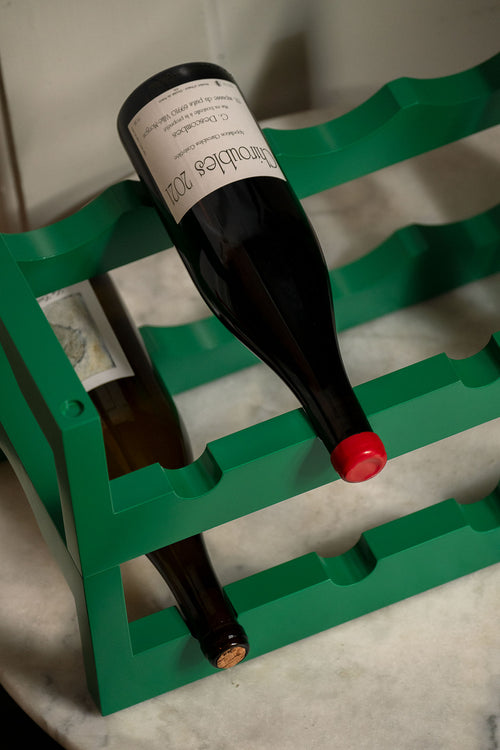
SILO WINERACK TAKE PLACE IN Côte d’Azur From the yellow mimosas of winter, red poppies of spring, lavender fields of Provence, all the way to the rocky coast of Côte d'Azur - discover Silo Winerack and some of our favorite places along the way. From the yellow mimosas of winter, red poppies of spring, lavender fields of Provence, all the way to the rocky coast of Côte d'Azur - discover Silo Winerack and some of our favorite places along the way. Why Silo? When Chris Martin begins his design process, his goal is to create something that he himself would like to buy and that he cannot find on the market. With more and more wine bars opening in recent years and an increased interest in good wines, Chris wanted to create dignified storage that lives up to the same high quality as the bottles it will hold. Based on a continuous loop, Chris Martin designed the wine rack in an unbroken line of wood, where the bottles rest firmly in milled-out compartments. Silo holds its bottles securely and in a horizontal position. The bottles have a 3.87 degree inclination to keep the wine in constant contact with the cork, something that stops the cork from drying out and spoiling the wine.  Le Meranda, 4 Rue Raoul Bosio, 06300, Nice, France  Fondation Maeght, 623 Chem. des Gardettes, Saint-Paul-de-Vence, France   Tio Chair and Coffee table at Foundation Maeght    Silo is available in black stained ash and natural ash.  Tio Easy Chairs in Haut de Cagnes   La Part des Anges, 17 Rue Gubernatis, Nice, France "Silo is a functional and logical wine rack. But something distracted me, it was almost too logical. It felt like you should be able to lift it up into place. It almost called for handles, even though it’s really an unnecessary feature. I quickly realized that we already had the handle shape in the grooves on which the bottles rested. After that, my job was done. The handles are a subtle detail that give an added a charm to the wine rack." - Chris Martin, Designer in Chief  National Picasso Museum, Place de la Libération, Vallauris, France The rack which has a typology taken from traditional wine cellars can store 4 bottles per unit and can be stacked up to four units high.  La Canon, 23 Rue Meyerbeer, Nice, France

4PM Self-Build by Pia Wallén

4PM SELF-BUILD BY PIA WALLÉN

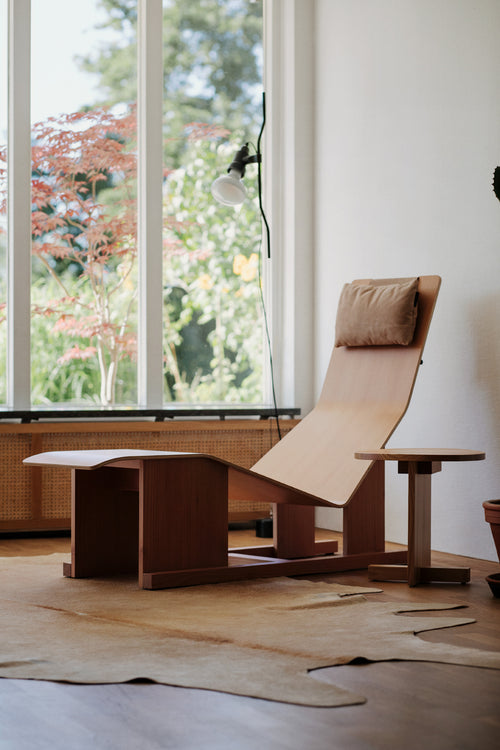
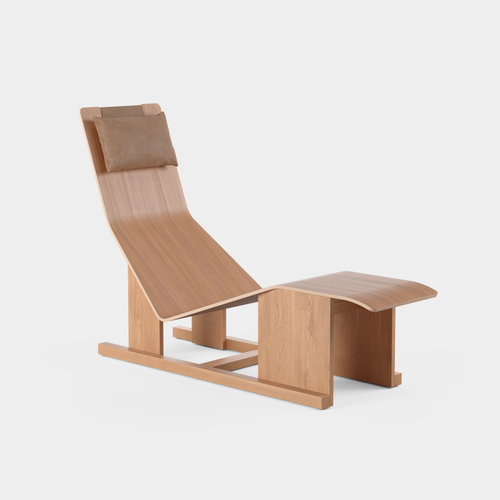
SWEDISH DESIGNER PIA WALLÉN AND THE LEMON YELLOW FELT A sun-splashed, glass-enclosed penthouse topping an 18th-century building is the enviable workspace of Pia Wallén. Situated in the center of Stockholm, it has sweeping views of the 80-meter-high tower of the Oscarskyrkan, a church dedicated to Oscar II, former King of Sweden. March 10 - 2022 Not that this stops her talent from crossing the boundaries of fashion, accessories, and interior. While a graphic red cross is often her signature, Wallén is not one to shy away from vibrant hues of pink, green, and yellow, often in contrasting combinations with black and white. Here she divulges the story behind her customization of the 4PM Self-Build chaise, and its celebration of a color she associates with joy, happiness, and survival.     "The naked wood and playful color also come closer to the chaise’s inspiration, Italian designer Enzo Mari and his self-build furniture." What drives your creativity? My creativity is like an ongoing research project. In all my work, I continue to search or to seek answers to questions I ask myself. If I do this and that, what will happen then? My new objects and products often transpire from my previous, responding to innovative and unique materials, techniques, and production practices. I might also be inspired by personal events or stories that move me. As a child, I worked with whatever came my way, whether it was textile or clay or paint. I always did something creative, but I didn’t have this idea to be a designer. In fact, in the beginning, I wanted to be a buyer – until I was a buyer at around 20 years old. I then saw that I wanted to change everything that I wanted to buy. That’s when I made the decision to try out being a designer. Now I’m trained as a fashion designer, but I like very much to crossover into different fields, with a common thing that is often material or technique. I appreciate the total design process for a product. What I like most is to make a process and a product from the very beginning. It’s difficult, perhaps, to make a story of something already there, and not the way I am used to working. " My combination of function and decoration for your body is quite similar to my past combinations of function and decoration to wear on your body – and why not a piece of furniture thatis also like jewelry?"   A sun-splashed, glass-enclosed penthouse topping an 18th-century building is the enviable workspace of Pia Wallén. Situated in the center of Stockholm, it has sweeping views of the 80-meter-high tower of the Oscarskyrkan, a church dedicated to Oscar II, former King of Sweden. "The studio was actually intended for an artist when they built the building. It’s a fantastic space with lots of windows, I live and stay here, and work a lot.” The color is the first thing we notice. I thought about survival and the affirmation of a sunny day on the beach, with its tranquility, reflection, and joy, and realized that I wanted to do it in yellow. There were no other colors coming up, just yellow standing up strong and clear. I think the color adds joyful attachment to the chair. Initially I thought about painting the entire frame yellow as well, but then I saw that the wood is very nice, Scandinavian in a way, and I wanted to save the beauty of the raw material.   " I wanted to have some textile on it, to make it a bit softer, and I work a lot with wool fiber and felted materials in my own production, mostly on slippers, table top decorative items, and bags. It’s a material I’m used to. The 4 millimeter-thick felt, which I source from Germany, is quite stiff. It’s an industrial textile that is not knit or woven – instead the wool fibers are pulled together in a mechanical way with needles." " I have my own company and I work from the initial idea until it gets out to the customer – even down to the packaging. I think I’m a little bit of a control freak. Of course there’s both a positive and negative side to that!"   What impression do you hope to give with your customization of the 4PM Self Build chaise? This isn’t my first experience with self-build furniture. Several years ago a Swedish newspaper published blueprints for the Red Blue chair, designed in 1918 by Gerrit Rietveld. I took the blueprints to a carpenter and now I have a few of these chairs in my studio. With this kind of project, you take a product and then add something – it’s always interesting to see how you – or others – use their own creativity, add their own fantasy to something that is almost ready. "I cut out the felt forms of the seat and laminated the wool felt on the four panels that make up the seat. I use this same method in my Slitz jewelry collection of bracelets and rings, which have laminated wool felt on metal such as sterling silver and brass. For me, it is always interesting to continue and build upon my previous projects."

SILO WINERACK TAKE PLACE IN CÔTE D’AZUR

SILO WINERACK TAKE PLACE IN CÔTE D’AZUR

SILO WINERACK TAKE PLACE IN Côte d’Azur From the yellow mimosas of winter, red poppies of spring, lavender fields of Provence, all the way to the rocky coast of Côte d'Azur - discover Silo Winerack and some of our favorite places along the way. From the yellow mimosas of winter, red poppies of spring, lavender fields of Provence, all the way to the rocky coast of Côte d'Azur - discover Silo Winerack and some of our favorite places along the way. Why Silo? When Chris Martin begins his design process, his goal is to create something that he himself would like to buy and that he cannot find on the market. With more and more wine bars opening in recent years and an increased interest in good wines, Chris wanted to create dignified storage that lives up to the same high quality as the bottles it will hold. Based on a continuous loop, Chris Martin designed the wine rack in an unbroken line of wood, where the bottles rest firmly in milled-out compartments. Silo holds its bottles securely and in a horizontal position. The bottles have a 3.87 degree inclination to keep the wine in constant contact with the cork, something that stops the cork from drying out and spoiling the wine.  Le Meranda, 4 Rue Raoul Bosio, 06300, Nice, France  Fondation Maeght, 623 Chem. des Gardettes, Saint-Paul-de-Vence, France   Tio Chair and Coffee table at Foundation Maeght    Silo is available in black stained ash and natural ash.  Tio Easy Chairs in Haut de Cagnes   La Part des Anges, 17 Rue Gubernatis, Nice, France "Silo is a functional and logical wine rack. But something distracted me, it was almost too logical. It felt like you should be able to lift it up into place. It almost called for handles, even though it’s really an unnecessary feature. I quickly realized that we already had the handle shape in the grooves on which the bottles rested. After that, my job was done. The handles are a subtle detail that give an added a charm to the wine rack." - Chris Martin, Designer in Chief  National Picasso Museum, Place de la Libération, Vallauris, France The rack which has a typology taken from traditional wine cellars can store 4 bottles per unit and can be stacked up to four units high.  La Canon, 23 Rue Meyerbeer, Nice, France

4PM Self-Build by Pia Wallén

4PM SELF-BUILD BY PIA WALLÉN

SWEDISH DESIGNER PIA WALLÉN AND THE LEMON YELLOW FELT A sun-splashed, glass-enclosed penthouse topping an 18th-century building is the enviable workspace of Pia Wallén. Situated in the center of Stockholm, it has sweeping views of the 80-meter-high tower of the Oscarskyrkan, a church dedicated to Oscar II, former King of Sweden. March 10 - 2022 Not that this stops her talent from crossing the boundaries of fashion, accessories, and interior. While a graphic red cross is often her signature, Wallén is not one to shy away from vibrant hues of pink, green, and yellow, often in contrasting combinations with black and white. Here she divulges the story behind her customization of the 4PM Self-Build chaise, and its celebration of a color she associates with joy, happiness, and survival.     "The naked wood and playful color also come closer to the chaise’s inspiration, Italian designer Enzo Mari and his self-build furniture." What drives your creativity? My creativity is like an ongoing research project. In all my work, I continue to search or to seek answers to questions I ask myself. If I do this and that, what will happen then? My new objects and products often transpire from my previous, responding to innovative and unique materials, techniques, and production practices. I might also be inspired by personal events or stories that move me. As a child, I worked with whatever came my way, whether it was textile or clay or paint. I always did something creative, but I didn’t have this idea to be a designer. In fact, in the beginning, I wanted to be a buyer – until I was a buyer at around 20 years old. I then saw that I wanted to change everything that I wanted to buy. That’s when I made the decision to try out being a designer. Now I’m trained as a fashion designer, but I like very much to crossover into different fields, with a common thing that is often material or technique. I appreciate the total design process for a product. What I like most is to make a process and a product from the very beginning. It’s difficult, perhaps, to make a story of something already there, and not the way I am used to working. " My combination of function and decoration for your body is quite similar to my past combinations of function and decoration to wear on your body – and why not a piece of furniture thatis also like jewelry?"   A sun-splashed, glass-enclosed penthouse topping an 18th-century building is the enviable workspace of Pia Wallén. Situated in the center of Stockholm, it has sweeping views of the 80-meter-high tower of the Oscarskyrkan, a church dedicated to Oscar II, former King of Sweden. "The studio was actually intended for an artist when they built the building. It’s a fantastic space with lots of windows, I live and stay here, and work a lot.” The color is the first thing we notice. I thought about survival and the affirmation of a sunny day on the beach, with its tranquility, reflection, and joy, and realized that I wanted to do it in yellow. There were no other colors coming up, just yellow standing up strong and clear. I think the color adds joyful attachment to the chair. Initially I thought about painting the entire frame yellow as well, but then I saw that the wood is very nice, Scandinavian in a way, and I wanted to save the beauty of the raw material.   " I wanted to have some textile on it, to make it a bit softer, and I work a lot with wool fiber and felted materials in my own production, mostly on slippers, table top decorative items, and bags. It’s a material I’m used to. The 4 millimeter-thick felt, which I source from Germany, is quite stiff. It’s an industrial textile that is not knit or woven – instead the wool fibers are pulled together in a mechanical way with needles." " I have my own company and I work from the initial idea until it gets out to the customer – even down to the packaging. I think I’m a little bit of a control freak. Of course there’s both a positive and negative side to that!"   What impression do you hope to give with your customization of the 4PM Self Build chaise? This isn’t my first experience with self-build furniture. Several years ago a Swedish newspaper published blueprints for the Red Blue chair, designed in 1918 by Gerrit Rietveld. I took the blueprints to a carpenter and now I have a few of these chairs in my studio. With this kind of project, you take a product and then add something – it’s always interesting to see how you – or others – use their own creativity, add their own fantasy to something that is almost ready. "I cut out the felt forms of the seat and laminated the wool felt on the four panels that make up the seat. I use this same method in my Slitz jewelry collection of bracelets and rings, which have laminated wool felt on metal such as sterling silver and brass. For me, it is always interesting to continue and build upon my previous projects."